
Armed Forces & World Wars
British Armed Forces
World Wars
Electoral Rolls
Looking for living relatives?
Search our UK Electoral Rolls (2002-2013) and find your living relatives today.

The British Newspaper Archive

Read about historical events at the time they were happening. Perhaps you'll discover your ancestor in their local newspaper?
New Military Records
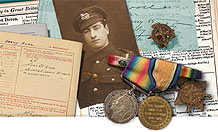
Was your ancestor a war hero?
View thousands of brand new military records, including Chelsea Pensioner records, Military Nurses, Prisoners of war and much more.
Gift subscriptions

Do you know someone interested in discovering their family history?
You can now buy a gift subscription to Genes Reunited so they can research their family tree.
The British Royal Navy
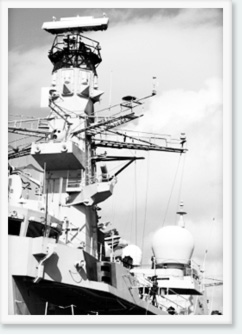
In both world wars the Royal Navy was a huge and complex organisation spread all across the world. It is therefore not surprising that the Navy's rank, profession, trade, pay and related badges structures were complex, and are almost impossible to understand.
It is important to remember that the Navy was divided into branches, sometimes called trades, such as Accounting, Engineering, Medical, and Fleet Air Arm. Ranks within these branches might have their own titles, such as Paymasters (accountants), Artificers (engineers) and Writers (clerks). Normally these titles would be added to their rank particularly for officers, such as Paymaster Lieutenant or Petty Officer Photographer for other ranks (equivalent to Chief Petty Officer), but by no means always. The grades of armourers, for example, were: Chief Armourer; Armourer; Armourer's Mate; Armourer's Crew. The branch was identified by badges worn on the right upper sleeve on the uniform.
The whole system is explained in more detail here:
Ranks, Professions, Trades, Pay & Allowances, and Badges of Rank - June 1942.
Royal Marines use Army ranks, with marines being the equivalent of privates in the Army.